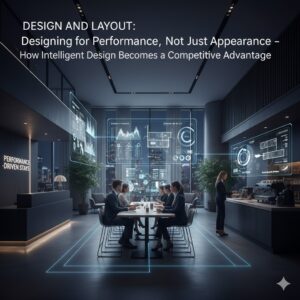
Design and Layout Designing for Performance, Not Just Appearance How Intelligent Design Becomes a Competitive Advantage
- December 26, 2025
- F&B Service Operation, Marketing, Restaurant Management
- 3 mins read
Design and Layout
Designing for Performance, Not Just Appearance
How Intelligent Design Becomes a Competitive Advantage
By FBMA Thailand
Modern Hospitality & Restaurant Advisory
Introduction: Why Design Is No Longer About Aesthetics
In today’s hospitality and restaurant landscape,
design is no longer judged by how impressive a space looks,
but by how effectively it performs.
Rising labour costs, frequent staff turnover,
higher guest expectations, and tighter margins
have transformed design and layout into strategic business decisions.
At Vigor Hotel Solutions, we see design not as decoration,
but as infrastructure for profitability.
- Modern Design Thinking: From Concept to Performance
Traditional design focused on form.
Modern design focuses on function, flow, and flexibility.
Effective contemporary design must:
- Enable smaller teams to operate efficiently
- Allow guests to intuitively understand the space
- Support speed, consistency, and service quality
- Adapt easily as business models evolve
Modern design is simple, intentional, and measurable.
- Layout Strategy: Designing for Movement, Not Floor Plans
Layout should never be designed from drawings alone.
It must be designed around human movement.
Key modern layout principles:
- Shorter walking distances increase productivity
- Clear sightlines improve speed and decision-making
- Multi-use spaces reduce fixed costs
- Fewer intersections between guests and staff reduce friction
A strong layout reduces dependency on highly skilled labour
and allows the operation to perform consistently—even with change.
- Hotels: Designing for Flow Rather Than Form
Arrival and Lobby Experience
Modern hotel lobbies no longer need to be grand—they need to be efficient.
- Mobile and self-check-in must be spatially supported
- Front desks should be smaller but smarter
- Waiting areas should double as social or co-working spaces
- Guest flow should feel natural, not managed
Guestrooms
Well-designed rooms prioritise usability over size.
- Intuitive layouts reduce guest confusion
- Technology must simplify, not complicate
- Maintenance access must be fast and discreet
- Housekeeping efficiency should be built into the design
Back of House (BOH)
Operational excellence starts where guests do not look.
- Modular and flexible service areas
- Shared support spaces where possible
- Minimal cross-traffic between guests and staff
- Designs that support outsourcing and automation
A strong BOH design protects service quality and margins.
- Restaurants: Less Space, Higher Returns
Guest Journey and Seating Strategy
Profitable restaurants are not those with the most tables,
but those with the best table turnover and flow.
- Flexible seating configurations
- Clear pathways for dine-in, takeaway, and delivery
- Cashier and payment points that do not disrupt movement
Kitchen as a Revenue Engine
A modern kitchen is compact, logical, and efficient.
- Multi-functional stations
- Clear separation of prep, cooking, and service
- Designed for peak demand without increasing headcount
- Reduced non-value-adding steps
Poor kitchen design immediately translates into higher labour costs.
Bar and Service Points
Bars must be visible, accessible, and operationally sound.
- Positioned as both a service hub and a sales driver
- Adequate storage and preparation space
- Seamless connection to primary seating areas
- Design as a Competitive Advantage
In a market where concepts are easily copied,
design and layout remain one of the hardest advantages to replicate.
Organisations that design well can:
- Scale faster across multiple locations
- Maintain standards with less training
- Reduce operational risk
- Achieve higher revenue per square metre
- Operate with leaner teams
At Vigor Hotel Solutions,
we define this approach as Design as Strategy.
- The Vigor Hotel Solutions Perspective
Before finalising any design, we ask one critical question:
“If experienced people leave, will the system still perform?”
If the answer is yes,
the design is ready for investment and growth.
Conclusion: Design That Works Harder Than People
Aesthetics will always matter.
But performance matters more.
In modern hospitality and food service,
great design does not impress—it delivers.
Design and layout, when done correctly,
become long-term business assets—not sunk costs.