The Self-Operate Market Scope of Self-Operate Models in Modern Non-Commercial and Contract Foodservice Management By Charles tan
- December 30, 2025
- Culinary & Cooking, F&B Service Operation, Marketing, People Management, Restaurant Management
- 2 mins read
Executive Overview
Across Asia—and increasingly in Thailand—the non-commercial and contract foodservice landscape is undergoing a structural shift. Large organisations are re-evaluating traditional outsourced catering models and moving toward Self-Operate Foodservice systems, where food operations are managed in-house as a strategic function rather than a support cost.
Self-operation enables organisations to gain direct control over quality, cost efficiency, brand alignment, user experience, and sustainability outcomes. For executives and investors, this model represents not only operational autonomy, but also long-term value creation—particularly in sectors where food directly impacts health, recovery, and quality of life.
- Defining the Self-Operate Market
The Self-Operate Market refers to foodservice operations that are owned, managed, and governed directly by the institution or organisation, covering:
- Strategic food policy and concept development
- Procurement and supply chain governance
- Workforce management and kitchen operations
- Food safety, nutrition, and regulatory compliance
- Cost control, productivity, and performance measurement
- Scope of Self-Operate Markets
2.1 Business & Industry: Corporate Organisations
(unchanged)
2.2 Healthcare Services: Hospitals and Medical Centres
(unchanged)
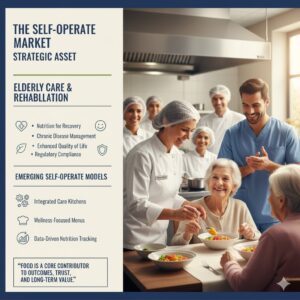
2.3 Elderly Care & Rehabilitation Centres
The ageing population across Thailand and Asia has accelerated the growth of elderly care facilities, rehabilitation centres, and long-term care residences, positioning foodservice as a critical component of care delivery.
Strategic Importance
- Nutrition as a determinant of recovery, mobility, and cognitive health
- Support for chronic disease management (diabetes, cardiovascular conditions)
- Enhanced resident satisfaction and quality of life
- Compliance with healthcare, hygiene, and safety regulations
Operational Characteristics
- Texture-modified diets (soft, minced, pureed)
- Individualised nutrition plans aligned with medical advice
- High standards of food safety and infection control
- Close coordination with nurses, therapists, and dietitians
Emerging Self-Operate Models
- Integrated care kitchens within rehabilitation facilities
- Wellness- and longevity-focused menu engineering
- Flexible meal timing aligned with therapy schedules
- Data-driven nutrition tracking and outcome measurement
For investors, self-operated foodservice in elderly care environments represents a high-trust, high-impact model, where service quality directly influences clinical outcomes, brand reputation, and regulatory standing.
2.4 Colleges and Universities
(previously 2.3 – unchanged content)
2.5 International Schools and Educational Institutions
(previously 2.4 – unchanged content)
- Modern Business Trends Shaping the Self-Operate Market
- From Cost Centre to Strategic Asset
- Experience-Led Service Design
- Digitalisation and Smart Operations
- Wellness, ESG, and Sustainability Integration
- Hybrid Operating Models
(content unchanged)
- Key Challenges and Risk Considerations
(unchanged)
- Strategic Conclusion for Executives and Investors
The Self-Operate Market is no longer an alternative—it is becoming a strategic operating choice, particularly in sectors where foodservice intersects with healthcare, ageing populations, and long-term wellbeing.
For organisations operating in elderly care, rehabilitation, hospitals, education, and corporate environments, the question is no longer whether to self-operate, but how professionally and strategically it is implemented.
In care-driven environments, food is not a service function—it is a core contributor to outcomes, trust, and long-term value.