Effective Marketing Strategies for Thai Hotels, Resorts, and Restaurants in the Modern Era
- November 27, 2025
- F&B Service Operation, Marketing, Restaurant Management
- 2 mins read
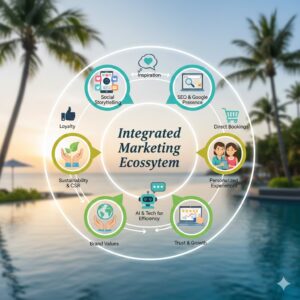
To thrive in today’s competitive landscape, businesses in Thailand’s hospitality and F&B sectors must execute a holistic strategy that fuses digital prowess, genuine personalization, and a commitment to sustainability.
- Digital Integration and Online Visibility Mastery
The digital presence must serve as the primary gateway to your brand experience.
- Search Engine Authority (SEO/SEM): Ensure your website achieves top-tier ranking for high-intent local search queries (e.g., “luxury resort Koh Lanta,” “best fine dining Bangkok”). Invest in Search Engine Marketing (SEM) to secure premium visibility for seasonal promotions.
- Optimized Google Business Profile (GBP): Your GBP must be impeccable. Maintain a continuous flow of high-quality imagery, precise operating hours, and, critically, proactive review management. Every review must be acknowledged with a personalized and professional response.
- Inspirational Social Storytelling: Utilize visual platforms to sell the experience, not just the product. Focus on creating aspirational content—behind-the-scenes glimpses, stunning views, and moments of joy. Leverage Instagram Reels and TikTok for high-velocity, trend-aligned content.
- Strategic Influencer Outreach: Move beyond mega-celebrities. Partner with Micro- and Nano-Influencers whose niche audience aligns perfectly with your target demographic, ensuring a higher degree of authenticity and conversion.
- Hyper-Personalization and Customer Journey Mapping
Moving beyond basic loyalty programs, the focus must be on crafting a unique journey for every guest.
- Data-Driven Customization: Utilize your Customer Relationship Management (CRM) system to capture and analyze guest preferences, allowing you to anticipate needs before they are voiced.
- Hotels/Resorts: Pre-check-in communication should offer curated add-ons (e.g., spa packages, private excursions) based on booking history or stated interests.
- Restaurants: Flag known allergies, dietary restrictions, or celebration occasions in the reservation system to enable a seamless and deeply personalized service experience.
- Targeted Communication: Employ Behavioral Email Marketing that segments your audience and delivers content that is timely and relevant (e.g., a “We Miss You” offer sent three months after checkout).
- Cultivating Trust Through Reputation Management (ORM)
Your online reputation is your most valuable non-tangible asset.
- Proactive Monitoring: Monitor all key review platforms constantly (TripAdvisor, Google, OTAs).
- The Art of the Response:
- Positive Reviews: Express sincere gratitude and use the opportunity to subtly reiterate your unique selling propositions (USPs).
- Negative Reviews: Respond swiftly, transparently, and with sincere empathy. Never get defensive. Take the conversation offline to offer a resolution, demonstrating your commitment to service recovery to the broader public.
- Embracing Sustainability and Ethical Sourcing
Modern travelers are increasingly making purchasing decisions based on a brand’s ethical footprint. Marketing sustainability is now a critical differentiator.
- Authentic Commitment: Implement verifiable sustainable practices (e.g., single-use plastic elimination, water conservation, renewable energy).
- Transparent Storytelling: Don’t just claim to be green—show it. Highlight initiatives such as: