Thailand Tourism Outlook 2026: What Lies Ahead and How the Industry Must Prepare By Charles tan
- December 6, 2025
- Beverage Knowledge, Culinary & Cooking, F&B Service Operation, Marketing, News & Events, Restaurant Management
- 2 mins read
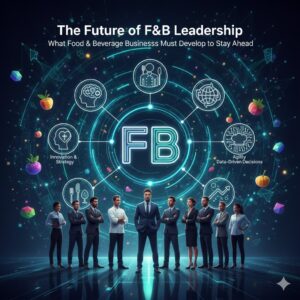
The global Food & Beverage landscape is entering a period of rapid transformation. Consumer expectations are evolving, competition is intensifying, and technology is reshaping how restaurants operate. In this new environment, only businesses that understand the direction of change—and adapt decisively—will emerge as leaders.
After more than five decades observing, managing, and transforming restaurants, hotel F&B departments, and culinary operations, I believe the path to leadership in the F&B industry requires development in five core dimensions: experience, efficiency, innovation, sustainability, and people.
- From Selling Food to Curating Experiences
Modern diners no longer choose restaurants only for taste—they choose them for emotion, story, and memorable journeys.
To lead the market, F&B businesses must offer:
- Signature dishes or culinary identities that cannot be copied
- Immersive dining experiences (chef’s table, storytelling menus, wine or drink pairings)
- High-quality interior and ambience that align with the brand
- Personalization—recognizing repeat guests, tailoring recommendations, and customizing service
In 2026 and beyond, experience creation will be as important as cooking itself.
- Operational Excellence: Efficiency Is the New Profit Center
In an era of rising food costs, labor shortages, and intense competition, operational efficiency becomes a decisive competitive advantage.
Leaders must adopt:
- Menu engineering to optimize profitability
- Smart purchasing and supplier management
- Waste control systems that reduce cost without compromising quality
- Accurate forecasting and refined portioning
- Clear SOPs, workflow mapping, and training
- Data-driven decision making—from POS analytics to customer behavior tracking
The strongest F&B businesses run like well-constructed machines: smooth, consistent, and cost-efficient.
- Innovation in Products, Technology, and Business Models
Innovation is no longer optional. It is the engine of sustained leadership.
Product Innovation
- Rotating seasonal menus
- Health-driven options (low sugar, plant-based, wellness cuisine)
- Signature dishes and drinks that define the brand
- Elevated local and regional flavors
Technology Integration
- Advanced POS systems
- Online reservations and table management
- QR-based ordering and digital menus
- AI-driven menu engineering and forecast tools
- Kitchen automation to reduce errors and labor fatigue
New Business Models
- Chef’s table dining
- Delivery-optimized kitchens with premium packaging
- Lifestyle F&B concepts: café + retail, restaurant + mixology bar
- Membership dining clubs or loyalty programs
- Collaborative pop-ups and guest chef events
True F&B leaders continually reinvent themselves before the market forces them to.
- Sustainability as a Core Business Strategy
Consumers are increasingly attentive to how restaurants treat the environment. Leadership now includes responsibility.
To lead, F&B businesses must pursue:
- Energy-efficient kitchens
- Reduced single-use plastics
- Composting and waste reduction practices
- Responsible sourcing from farmers and ethical producers
- Carbon-conscious menu development
- Clear communication of sustainability efforts
Restaurants that embrace sustainability not only protect the planet but also appeal to younger, more value-driven customers. Sustainability will shape purchasing decisions more strongly each year.
- The Human Factor: Building a World-Class Service Culture
No technology can replace warmth, hospitality, and human connection.
Great F&B businesses are built on exceptional people.
To become an industry leader, restaurants must invest in:
- High-level training in service excellence
- Multi-skill development (F&B, mixology, wine, language, sales)
- Strong leadership pipelines
- Fair compensation, incentives, and retention programs
- Workplace cultures that prioritize respect, teamwork, and growth
A motivated team creates loyal guests—and loyal guests build long-term profitability.
What Will Define F&B Leaders in the Future?
The F&B enterprises that dominate the next decade will be those that:
- Deliver unforgettable, differentiated experiences
- Operate with precision and cost discipline
- Continue innovating in concepts, menus, and technologies
- Integrate sustainability into their identity
- Build strong teams with genuine service hearts
- Understand the shifting behavior of modern diners
- Communicate their brand consistently and authentically
Leadership in F&B is not about being the biggest—it is about being the most adaptive, the most creative, and the most trusted.
In an increasingly competitive market, restaurants that evolve today will set the benchmark for tomorrow.